 Why Do I Sleep Hot?
Why You Sleep Better in Hotels: Temperature, Bedding and Dark
By the Good Sleep team · October 22, 2026
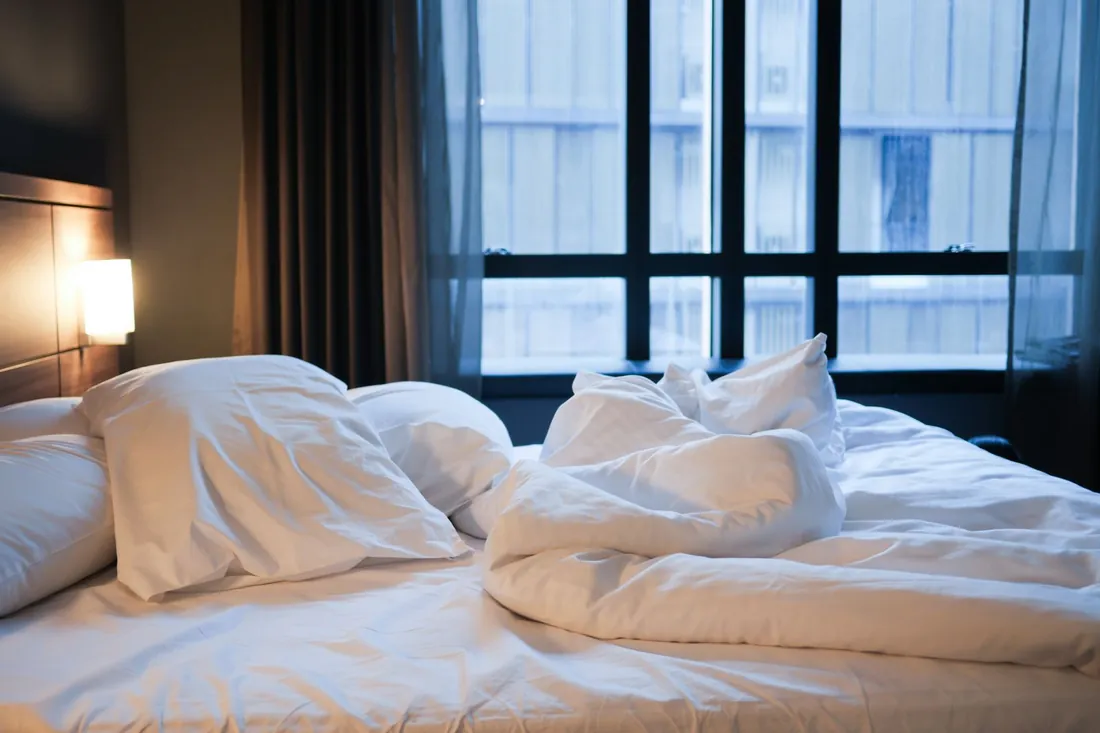
Short answer: good hotel rooms get the basics right: a thermostat you can turn down, crisp, breathable sheets, a lighter duvet, blackout curtains and few distractions. If you sleep better there than at home, your bedroom is probably too warm or too bright. You can copy most of it.
Not everyone does
Plenty of people sleep worse on the first night somewhere new. Sleep researchers call it the first-night effect. So if you consistently sleep better in hotels, that's a strong hint that your home setup is the problem.
What hotels get right
- Temperature. You walk in and set the room cold. At home, the thermostat is often a family compromise.
- Bedding. White cotton percale and a lighter duvet breathe better than flannel and heavy polyester.
- A fresh mattress protector and pillows that haven't flattened into heat-trapping slabs.
- Dark. Blackout curtains block streetlights and early sunrise.
- No to-do list. Nothing on the nightstand reminds you of chores.
Bring the hotel home
- Set the bedroom between about 60 and 67°F, the range Cleveland Clinic suggests.
- Swap to cotton percale or linen sheets and a lighter duvet.
- Add blackout curtains or a sleep mask.
- Keep the bedroom for sleep: laptop and laundry elsewhere.
- If your mattress is the heat source, cool its surface. Good Sleep makes a topper that cools to 62°F on your existing mattress.
Read more about which habits make you sleep hot at home, and how to sleep cooler at night without cranking the AC.
When to see a doctor
If you sleep poorly almost everywhere, snore loudly or wake up exhausted, a hotel won't fix it. Cleveland Clinic recommends seeing a doctor for insomnia lasting several weeks or signs of sleep apnea.